How to beat Homesickness

Homesickness is the number one reason why exchange students choose to end their exchanges and go home early.

Nobody who’s experienced homesickness forgets what it’s like. Being separated from your home and your loved ones can hurt like crazy. The days drag. You want to go to bed early and wake up late. Difficult things – like speaking a foreign language, finding your way around a new city or interacting with strangers all day – start to seem impossible.

The good news is that there are things that everyone can do about being homesick. In fact, you only have to do a handful of key things to feel more positive, start to get rid of your homesickness for good, and begin loving life overseas.

In this article, I’ll show you how to beat homesickness. Here’s what to do:

Step 1: Don’t panic

Why do you feel homesick?

It’s simple. Homesickness occurs because you’ve left one situation – living at home – and moved to another, new and unfamiliar situation – living overseas. Being in the new situation makes you unhappy.

This is a totally normal human emotion. Almost everyone who leaves Situation A and goes to Situation B misses Situation A for a while.

Think about it. Someone who starts a new job will often feel nostalgic about his previous job for a little while. People who move houses usually don’t enjoy living in their new houses for the first few weeks, and miss their old homes. Kids who change schools usually miss their old schools for a month or two. But after a while, everybody adjusts to their new situations and begins to enjoy things.   

You’ll adjust and start enjoying living overseas soon, too. Your homesickness is only temporary. It will most likely pass in a matter of weeks.

Remember this, stay cool, and don’t panic.

Step 2: Cut the cord

If you want to settle in overseas and stop missing home so much, you must cut yourself off from home and start standing on your own two feet.

Don’t talk to your Mom every night. Stop DMing everybody at home so much and replying to their DMs. Avoid obsessively checking your phone. Every time you do these things, you are making things hard for yourself. You are strengthening the bond to your home country, and weakening the bond to your host country.

Goal 1 of being on exchange is to live like a local. Goal 2 is to learn self-sufficiency. You can’t do either of those things until you get some independence from your home and the people you left behind. So cut them off, as politely and quickly as possible.

Step 3: Turn off the push notifications

Further to step 2: if your iPhone is pinging every five minutes, you’ll never stop picking it up. So turn off the push notifications. Instagram – off. Facebook – off. TikTok – off. Just turn them off and focus on living life.

Step 4: Attack the two things that make homesickness worse

The two biggest sources of unhappiness for people who move overseas are culture shock and the language barrier. You must focus relentlessly on beating these.

The cure for culture shock is to consume more of the local culture in your new country.

Watch more local TV, listen to more local music, eat more local food, do more local sightseeing, go to more local events. Your new home country will be full of incredible sights, culture, food and experiences. The more you get out and start experiencing these things, the more you’ll find to enjoy.

Also, pay close attention to the people in your new country. How do they dress? How do they conduct themselves? Are there any social norms or habits that you need to pick up? Then, adapt your behaviour so that you behave more like a local. If you want to feel less like a fish out of water, you need to start jumping into the water.

The remedy for the language barrier is just as simple, if less enjoyable. You need to work your ass off.

The only way to conquer a language is to spend as much time as possible learning it. Purchase a grammar book and do the exercises every day until you can’t stand it any more. Rote-learn vocabulary. Practise speaking the language, no matter how foolish you feel at first.

You need to become completely preoccupied with speaking the language of your host country as perfectly as you can. This will have two main benefits:

1. You’ll feel more confident, less inhibited, and happier, and

2. You’ll be able to converse with more people, and start connecting and making friends as a result.

Step 5: Work on improving your new life

Small victories and improvements add up. If you make a positive change every day which improves your life by just one per cent, your life will be 37 times better after a year.

One of the best ways to overcome homesickness is to make your life overseas even better than the life you had at home.

There were probably a few things about your life at home that you weren’t happy with. Bad sleeping habits, poor eating, too little exercise, bad relationships, and more.

All that stuff has gotta stop some time. Why not now? Moving overseas is a massively disruptive event. While you’re going through all that change, take the opportunity to get rid of some baggage, too.

You know that morning people are usually happier and more productive, right? So stop going to bed late. Turn in early every night so that you can get going earlier.

Do you drink a lot of alcohol? Stop it. You’ll feel much healthier and more positive living abroad if you never wake up hung-over.

Within a few days of arriving overseas, make a list of bad habits you’ve fallen into and other things that you want to change. Then, promise yourself that you’ll work on changing all of those things. Start right away. The more you change, the more you’ll enjoy your new life overseas, and the less homesick you will be. Try it.

Step 6: Learn to forgive yourself

Ask yourself honestly: do you have a big ego? Are you a proud person?

If so, you’ll soon encounter a problem. Exchange students and others who move overseas are constantly making mistakes, screwing things up, and looking foolish – especially at the start.

If you let them, all of these little mistakes will start to eat you up. They’ll make you feel miserable and homesick.

So, get into the habit of forgiving yourself when you make a mistake. Remember that living overseas is hard. Nobody is thinking less of you because you’re making mistakes. Let it go, and move on.

Step 7: Stay busy

Being in a foreign country and having too much time on your hands is a recipe for homesickness. The more free time you have, the more of it you’ll spend thinking about home.

So, fill that free time with as much activity as you can. Doing things with your host family, exercising, language learning, and so on. Even tidying your room or house is less likely to make you homesick than just sitting there doing nothing.

******

Homesickness is a huge problem for some exchange students. But it doesn’t need to be a problem at all for you. Take the steps outlined above, work hard, trust that things will get better, and they eventually will. You can do it!

Good luck, Matt

How to Live the Good Life as an Exchange Student

What’s the difference between a good student exchange and a great student exchange?

How can you have a great student exchange?

It’s a lot easier than you think. There are only a few key rules that you need to follow to make sure you have the best time possible. I’ve distilled these down to 20 rules, which are set out below. Follow these, and you’ll have a fantastic, rich and successful experience. And for even more tips about how to have a great exchange, check out my book.

1. Get used to making mistakes and forgive yourself for making them

People who play it safe in life never learn or achieve anything. That goes double for people on exchange. You have to put yourself out there. That means making a lot of mistakes. You’ll make mistakes when you try to speak the language. You may mispronounce people’s names. You’ll miss trains and buses. You may look foolish in front of your host family and school class. It’s no big deal and everyone will make allowances. Accept that you’ll make mistakes, and find a way to get over them quickly and move on.

2. Mix it up

You only get 6-12 months in your host country. In the context of your life, that’s an absurdly short time. You need to do new things every day in order to experience all the variety and richness of your host country. Talk to new people, try new sports, watch new TV shows, eat new foods. Not only does trying new things help you to discover your host country. It’s also one of the most effective ways of staving off boredom.

3. Search for good habits that you can adopt

Anyone who acts and thinks the same on the first and last days of his exchange has wasted a year. Being on exchange gives you the chance to observe other people and learn their good habits. This can be incredibly valuable. Look at how your host parents behave. What are their good habits that you can adopt yourself? Observe how the parents of your school friends act. What do they do which is different to what people at home do? Look at the population of your host country generally. What traits do they have that you can pick up and continue when you go home?

4. Be generous and kind

Many people are sacrificing and giving so much so that you can be on exchange. Don’t forget to repay this generosity. Be kind and helpful towards your host parents and host siblings. Be a good classmate to people at your school. Act as helpfully as you can towards other exchange students, especially those who’ve arrived more recently than you and who are struggling with homesickness and culture shock.

5. Write

Writing is a healthy way to process the emotions you experience while you’re on exchange. Some of these emotions can feel overpowering at times. Keeping a diary, writing emails to friends and family, or writing a blog can help to keep things in perspective. Anything you write will also serve as a record of your time on exchange, which you and your family will enjoy revisiting in future.

6. When you learn a language, do the time

When it comes to language learning, you need to put in the time. There is simply no substitute for rote learning vocabulary and the rules of grammar. Do at least an hour a day. On the upside, you can usually walk outside and apply everything you’ve learned right away. Your efforts can pay off instantly. See my article on language learning here.

7. Suppress negativity

Everyone expects you to be homesick. They will make allowances for it. What people won’t appreciate is continuous complaining and negativity about your host country, school, classmates, and so on. You’re also not doing your mental health any good by dwelling on the bad things about your host country. Inevitably, some things about your host country will be worse than the equivalent things at home. The sooner you can make peace with that and move on, the better you’ll be.

8. Don’t fall into bad habits

Being on exchange can be hard. The easy path to dealing with those difficulties is to adopt bad habits – eating too much, drinking or doing drugs, spending too much time on social media, hanging out exclusively with other exchange students. Fight the temptation to do these things. The only good, effective way to meet the challenges of being on exchange is through hard work. No short-cuts.

9. Seek connections

Don’t retreat to your room and bury your head in your phone. Relying on social media to stay connected will only make you feel isolated. Instead, seek real connections with people in the real world. Spend some time every day interacting with your host family – even if it’s just sitting and watching sport on TV with them. Join a club or church group or other arrangement where people meet regularly in small groups. If your school offers after-school sport or band, do it. Surround yourself with people whom you can talk to and connect with.

10. Keep yourself fit and healthy

This is not up for discussion. For the sake of your physical and mental health, you must keep active and healthy while you’re on exchange. For the first half of my exchange, I did no sport. During the second half, I swam three times a week and rode mountain bike. The second half beat the first half hands down. I was happier, looked better, and was much more at peace with my situation. Whatever you do, make the time to stay active.

11. Remember that your reputation counts

Exchange students are minor celebrities. People notice and remember how they behave. For this reason, you need to cultivate a reputation as someone who is open, friendly and positive. Also, don’t forget that how you behave doesn’t just reflect on you personally. People will assume that everybody in your home country acts the way you do.

12. Don’t get too caught up in what’s going on back home

Want to know what’s going on back home while you’re on exchange? I’ll tell you: the same old people are doing the same old things and visiting the same old places. When you get home, you’ll be amazed at how little things have changed in your absence. While you may long for the familiarity of home, you’re usually not missing out on much. Focus on the here and now of your host country, rather than dwelling on the situation back home.

13. If you find it hard to be self-disciplined, use routines

You may find it hard to muster the energy you need to do everything. This is especially true at the start of your exchange. If so, try to automate as much as possible so that you don’t have to rely upon self-discipline to get things done. Set up a kind of timetable where you allocate time for language learning and time with your host family every day. Give yourself half an hour of phone time twice a day – maybe at the start and end of the day. Allocate time for exercise and writing. Like eating broccoli, schedule the boring or unpleasant things first, and then do the enjoyable stuff. Allocate time for the important things, and then make sure that those important things get done at the appointed times.

14. Build meaningful relationships with your host family

Things will go much better for you on exchange if you establish good and meaningful relationships with your host family. Don’t treat their house like a hotel. Respect and trust your host mother and father – they genuinely care about you and are invested in your happiness. Your host siblings want to get to know you and be your friend. Give them the satisfaction of attaining these things. Above all, make sure you spend time with your host family and play an active role in the life of the family.

15. Don’t give up unless you absolutely have to

The life of an exchange student is full of little struggles. Sometimes even getting out of bed in the morning to go to school can be a struggle. Whatever you do – whether it’s language learning or talking to strangers at school or saying no to another croissant – be as courageous and firm with yourself as you can. Aim to succeed in everything. If you give in and do what’s easy once, you are more likely to do it again. And because small surrenders add up, you’ll end up feeling demoralised and weak. Be firm and disciplined, and don’t give up unless you absolutely have to. You’ll be amazed at how strong you can be.

16. Aim big

Don’t settle for an average student exchange. The iPhone didn’t succeed because Steve Jobs wanted to make an average phone. It succeeded because he wanted to make a phone that would blow everything else away. You want to have the iPhone of exchanges. Learn the language until it’s as close to perfect as you can get it. Be the best exchange student which your school has ever hosted. Be on friendly terms with everyone – your classmates, every other exchange student in your program, your host family’s neighbours. Regularly examine every aspect of your life on exchange – especially the relationships you have – and improve things as much as you can.

17. Keep polarising opinions to yourself

Some things unite people. Other things divide people. The big divisive topics are politics and religion. If you have strong opinions about these topics, you need to keep them to yourself while you’re on exchange. Put bluntly, your host family and classmates don’t want to hear how about how much you do or don’t like Donald Trump. They don’t care about your views on Brexit. They don’t want to hear about how you do or don’t believe in God. When you make conversation with schoolmates and other people you meet, focus on things which bring people together – like music, food, travel, movies and sport. Keep it light and good-humoured.

18. Seek visceral experiences which activate your senses

The most pleasurable and memorable days of your exchange will be the ones you spend outside, in the sunshine. Swim in lakes. Spend a whole day riding your bike between villages. Go running in the woods without any headphones on. If your host family lives on a farm, help with chores like fencing, herding livestock or making hay. If your exchange is in a cold climate, spend plenty of time in the snow. In 20 years’ time, you’ll remember just one of those days with greater clarity than all of the 100 days you spent inside.

19. Let yourself be guided

One big objective of being on exchange is to learn how to think and solve problems independently. However, it’s necessary and also healthy to seek and act upon the advice of others. Regularly seek guidance and help from your host parents, school friends and other exchange students. Be humble enough to ask for their help when things go wrong. As well as helping you to have a better time, this will deepen your relationship with the people who help you.

20. Make plans for the future

Most people find the first year back at home following their student exchanges much more difficult than being on exchange. They get a kind of “reverse homesickness”. One tactic to avoid this is to spend some of your time on exchange planning your post-exchange life. Where do you want to live? What sort of career do you want to have? Do you want to start a business, and if yes, what kind of business? Do you want to have kids? Being overseas gives you the time and space to think about these really big issues with greater clarity and objectivity than if you were thinking about them at home. When you arrive home, having some clear ideas and plans about your future will give you something to work towards and keep you from missing your host country too much.

Good luck,

Matt

Encouragement for your first months on exchange

Most exchange students find the first and second months on exchange to be the toughest ones. This can be the period when:

  • Their homesickness is at its worst
  • They are having the most difficulties with language
  • They are suffering from culture shock
  • They most feel like giving up and going home

These feelings usually pass in time. Still, your first two months on exchange might really test your toughness and mental fortitude.

Churchill

London
London (Herry Lawford/Flickr)

Recently, I went looking online for the Winston Churchill speech containing his famous “never give in – never, never, never” quote.

Churchill gave the speech in 1942 as an address to students at his old school. When I found it, the part which caught my eye wasn’t that famous quote. It was another part of the speech, where Churchill discussed a proposed amendment to the school’s traditional song. The amendment would have added a reference to the “darker days” of World War 2. Churchill said:

Do not let us speak of darker days: let us speak rather of sterner days. These are not dark days; these are great days – the greatest days our country has ever lived; and we must all thank God that we have been allowed, each of us according to our stations, to play a part in making these days memorable in the history of our race.

Churchill was correct. Greatness – true greatness – doesn’t occur when things are easy. Greatness always comes from people rising to a challenge and overcoming great odds to succeed.

Metallica frontman James Hetfield’s greatest hour wasn’t in 1991, when he was the already rich and famous musician who wrote the seminal riff for “Enter Sandman”. Hetfield’s greatest moment happened ten years earlier, when he was an orphaned nineteen-year-old working at a sticker factory in Los Angeles and sitting in his truck during lunch breaks writing songs.

Jon Hamm’s greatest hour didn’t occur on the set of Mad Men. It took place during the many years in which he waited tables in LA, toiling to keep his head above water while he worked on his dream of being a Hollywood actor.

LeBron James’ greatest moment didn’t happen during any of his three NBA championship seasons. It occurred when he was in high school, training hard to reach the NBA despite his upbringing as the son of a teen mother and absentee father.

Your own moment of greatness

Atlas
(Alan Wu/Flickr)

Your own moment of greatness won’t come at the end of your exchange, when you’ve got everything sorted out and under control. Your moment of greatness is happening right now.

Getting out of bed every day and going to your new school is heroic.

Hitting the books hard and rote-learning vocabulary and grammar to the point of exhaustion is one of the hardest mental challenges for anyone.

Persevering despite the hardships and occasional embarrassments you encounter as a newly arrived exchange student is incredibly courageous.

Slowly, your own strength and perseverance will enable you to climb the mountain which is in front of you. There will be some days when you feel like you’re moving backwards or sideways instead of progressing. But as long as you keep working hard and maintain a good attitude, you will keep on moving forward. Things will get a little easier every day.

There may be times when you feel weak, or embarrassed, or overwhelmed. All of those feelings are totally normal for an exchange student. They are unpleasant and can be difficult to deal with. However, you can deal with these feelings, and succeed in spite of them.

Don’t forget that there are many people around you who want you to succeed. Although your success ultimately depends upon your own courage and effort, your host family and exchange organisation will help you in any way they can.

At the end of your exchange, and for many years into the future, you are going to look back on this time. You’ll marvel at the grit you showed and the strength you were able to find within yourself. When times are tough – for example, at work or in a relationship – you can remind yourself of this time. You’ll know that the strength you showed as an exchange student can also get you through virtually any other challenge in life.

Roosevelt

(Ryan Treadwell/Flickr)

In another famous speech, President Theodore Roosevelt said:

It is not the critic who counts; not the man who points out how the strong man stumbles, or where the doer of deeds could have done them better. The credit belongs to the man who is actually in the arena, whose face is marred by dust and sweat and blood; who strives valiantly; who errs, who comes short again and again, because there is no effort without error and shortcoming; but who does actually strive to do the deeds; who knows great enthusiasms, the great devotions; who spends himself in a worthy cause; who at the best knows in the end the triumph of high achievement, and who at the worst, if he fails, at least fails while daring greatly, so that his place shall never be with those cold and timid souls who neither know victory nor defeat.

As an exchange student, you are well and truly “in the arena” every day. Keep on working and doing your best, and the triumph of high achievement which Roosevelt talks about will be yours.

Tips for Foreign Exchange Students in Germany

Tips for foreign exchange students in Germany

Students going on exchange to Germany have many things to look forward to. On the whole, Germans are friendly, open-minded and surprisingly funny. Germany itself is a land of great diversity, with landscapes including alpine high country, deeply-wooded forests, and picturesque valleys (such as the famous Rhine Valley). Germany also has many rich cultural traditions, and in many ways is still at the cutting edge of music and the arts.

In short, Germany is a great student exchange destination. I liked it so much that I did two university exchanges there. Here’s what I learned:

Photo of Lorch, Germany
The Rhein (Photo: Mark Strobl/Flickr)

Language

Germany’s official language is German. Germans speak a range of different dialects. However, the purest German is known as “High German” (Hochdeutsch).  High German is the dialect which is most commonly used for TV and radio broadcasts, and should be the dialect which your teachers used if you’ve previously taken German language lessons. Instruction at your German school should also be in High German, even if the local dialect is different.

The dialects spoken in some parts of Germany – particularly in Bavaria, Baden, and the former states of East Germany – can be difficult to understand at first. However, they aren’t radically different from High German, and you’ll adjust to them quickly.

After returning from my exchange to Germany, I taught German to adults at night school for seven years. My number one tip for learning German is to spend as much time as possible learning the grammar, with the aid of a book like Schaum’s Outline of German Grammar. You’re welcome.

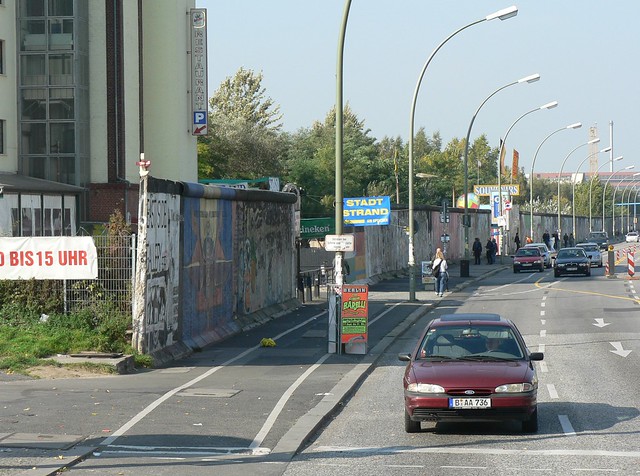
Berlin Wall remnants
Remnants of the Berlin Wall, Berlin (Photo: Alistair Young/Twitter)

High School

Like many other European nations, Germany streams high school students depending upon students’ planned career paths. Usually the different streams are as follows:

  • Students who intend studying at university go to a type of school called a Gymnasium
  • Students who will undertake clerical careers – working in banks, or in sales – attend a type of school known as a Realschule
  • Students who will study a trade or perform manual work go to a type of school known as a Hauptschule

Depending upon your own future career plans and level of German language proficiency, you’ll most likely attend a Gymnasium or a Realschule. Incidentally, don’t feel that you’ve been short-changed if your exchange organisation arranges for you to attend a Realschule. The students there are typically more relaxed and should have more time to socialise than students who attend a Gymnasium.

Attire

German high school students don’t usually wear school uniforms or need to observe a school dress code. Note that, like many other Europeans, German students typically dress in dark colours, especially in the Winter months.

Co-curricular activities

Some German schools offer co-curricular activities such as team sports, band or choir. However, it’s more common for young Germans to participate in those activities in local Vereine (clubs), rather than as part of school. If you want to participate in such activities while you’re on exchange, check with your host family when you arrive and ask them to help you get organised.

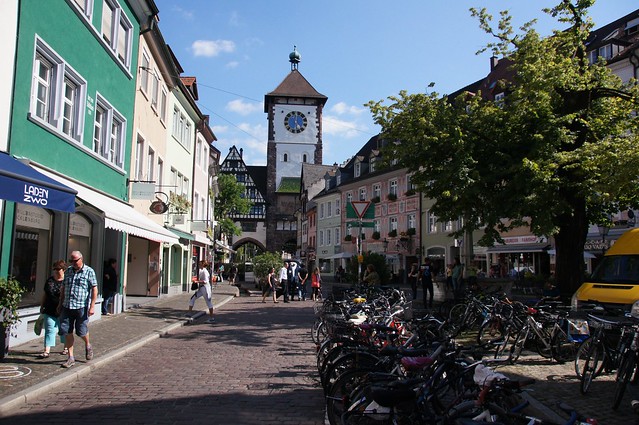
Freiburg im Breisgau, Germany
Freiburg im Breisgau, Germany (Photo: Frederick Rubensson/Flickr)

Social etiquette (a.k.a. what Germans like, and what they don’t like)

Germans have a reputation for being stiff and formal. In my experience, that reputation is ill-deserved. Young Germans, in particular, are quite laid-back, have a good sense of humour, and are generous and open-minded.

World War 2

Germany’s actions in World War 2 – particularly its role in perpetrating the Holocaust – are a continuing source of shame and embarrassment for many modern Germans. Germans are determined not to forget Germany’s part in Word War 2 and believe that being mindful of the past will prevent them from repeating the same mistakes in future. However, this determination at times goes too far and becomes a kind of morbid fixation on the past. As a result, many German high-school students today still feel personally responsible for the Holocaust, even though, in most cases, those events took place even before their grandparents were born.  

For a high-school exchange student in Germany, the safest and most tactful approach when it comes to World War 2 is to avoid mentioning it. If someone else brings it up in conversation, don’t dwell on it. Never, ever joke about it. If someone asks you your opinion on Germany’s role in the war, or what you think about Nazism, just say that it was a long time ago, and that you find it hard to believe that any modern German would do such things.

Religion

By Western standards, Germany is still a religious country. For example, many Germans still voluntarily donate 10 per cent of their wages to the Catholic or Protestant church. Most people still consider themselves religious, even if they don’t go to church regularly.

What this means in practice is that you will need to avoid exclamations such as “God!” or “Jesus!”, as these may offend people. If you aren’t religious yourself, avoid talking negatively or skeptically about religion, or religious holidays or practices.

Formal and informal

In common with many European languages, German has formal and informal ways of addressing other people. Although people will make allowances for someone who’s clearly a foreigner and unused to the language, addressing someone informally, when you should be using formal language, can be considered rude.

The basic rule of thumb when speaking German is that you only address the following groups using informal (du) language:

  • Children
  • Relatives
  • Animals
  • Friends
  • Things

In all other cases, you should use the formal (Sie). Where you aren’t sure about whether to address someone using formal or informal language – for example, because they’re an adult friend of your host family whom you’ve only just met – it’s safest to use formal language.

Neatness, order, hard work

A final cultural note is that Germans value neatness and orderliness very highly. In practice, this means that your host parents may expect you to keep your room and belongings neater than you are used to at home. They may also be strict about things like ensuring that your dirty clothes are the right way out (not inside-out) when you put them out to be washed.

Germans also have a very strong work ethic. This may mean that your host parents will expect you to demonstrate that you are working hard at school and/or at learning German. Indeed, they may say something if they don’t think you’re working hard enough. (Pro tip: doing your homework or language learning at the kitchen table or other visible place in your host family’s house is a good way to demonstrate that you are working hard).

Money management

Germany has a well-developed banking sector. There is usually at least one bank in every town, and ATMs are widespread. Your host parents will help you to sort out a bank account soon after your arrival.

In common with most other parts of Europe, Visa cards and Mastercards are widely accepted by German shops, as well as all post offices, train station ticket offices, and so on. Fewer shops accept American Express, Diners’ Club and other cards. So, if you are planning to take a credit card with you on exchange to Germany – which I recommend – go with a Visa or Mastercard.   

Harbour City, Hamburg
Harbour City, Hamburg (Photo: Thomas/Flickr)

Cost of living

When it comes to other expenses, you needn’t worry – by Western European standards, Germany is an inexpensive place to live. Germany’s post-World War 2 economic miracle was built on the back of fierce competition between German firms trying to find better and more efficient ways to serve their customers. As a result, it’s possible to live quite cheaply in Germany. Entertainment items (music, DVDs, books) are reasonably priced. Name-brand clothing can be harder to find than in the US or Australia, but is also usually well-priced when you do track it down. Phone credit is relatively inexpensive in Germany.

Getting around

Most German students get around using a combination of bike and public transport, and it’s likely that you will, too. Because Germany is a densely-populated country, this combination of bike, trains and buses should enable you to see and experience a great range of things in your local area.

The German federal railways (Deutsche Bahn, or DB for short) offer clean and efficient transport between major cities. No matter how small your host town is, trains should go to the nearest big city at least once per hour. Major rail hubs such as Munich, Frankfurt and Cologne have several services daily to other major European cities. Be warned that it’s usually mandatory to reserve a seat on long-distance trains.

Larger German cities usually have their own Stadtschnellbahn (S-Bahn) urban train networks, with connections every few minutes to other parts of the network. It’s usually possible to purchase a daily, weekly or monthly ticket giving you unlimited travel on these networks. Your host family or exchange organisation may subsidise or even fully fund the purchase of your monthly ticket.

Titisee, Germany (Photo: Allie_Caulfield/Flickr)

German food

German food has a reputation for being stodgy and heavy. Things like sausages, potato and dumplings still form an important part of the German diet. However, like everyone, Germans have embraced cuisine from all over the world. Accordingly, it’s likely that your host family will serve pasta, pizza, French fries, and many of the same foods you eat at home.

Vegetarianism and veganism are widely practised in Germany and your host family should be able to cater for you if you don’t eat meat and/or dairy products.

If you feel like eating out, you’ll find Chinese, Indian, Turkish and Italian restaurants and take-aways pretty much everywhere. The usual fast-food suspects (McDonalds, Burger King, Pizza Hut, Subway) also have a presence in all major German cities.

If you’re out somewhere and need a snack or a cheap lunch, there are a wide range of German supermarkets offering chocolate, baked goods, pre-packed sandwiches and rolls, and so on, at rock-bottom prices. Aldi, Lidl and Penny are the biggest discount chains. There are also bakeries all over the place – Germans make great bread, croissants and pastries, so these are a good option.

German culture

Music

Germans produce and listen to almost every kind of music you can think of – from jazz, to hip-hop, to heavy metal, to classical. Germans also basically invented “boy-band” music and techno. No matter what your taste in music, you’ll be able to purchase it or see it live while you’re on exchange in Germany.

German free-to-air radio is also surprisingly good. Most of the songs which are popular in the English-speaking world are also popular in Germany, and German radio also plays some popular German, French and Italian-language songs. As noted in my article on language learning, listening to the radio is also an excellent, cheap way of improving your language skills.

Other fine arts

Germans value the other fine arts very highly. Consequently, even many smaller German towns have their own theatres, orchestras and art galleries. Your German high school may also offer theatre and art courses which you can participate in.

Sport

Sport plays a big part in German life. The most popular spectator sports in Germany are soccer in the summer months, and snow sports in Winter. Germans participate in virtually every sport possible, so if you currently play a sport at home and want to keep it up while you’re on exchange, this should be possible.

Photo of Dresden
Zwinger Palace, Dresden (Photo: Bernd Thaller/Flickr)

Communications

As a modern, affluent society, Germany has excellent telecommunications infrastructure. Your host family should have access to fast broadband and there should be no issue with you accessing their WiFi network. Your host parents should also be able to help you organise a SIM card for your cell phone upon your arrival in Germany. Cellular phone services in Germany are fast and offer virtually universal coverage.

Where to go

Your exchange organisation may not enable you to choose where in Germany you go on exchange. If you do have a choice, however, I recommend the Southern states – Baden-Wuerttemberg and Bavaria. Generally, these are the warmest parts of Germany, are very prosperous, and are centrally located within Europe. For example, my former home town of Freiburg in Baden-Wuerttemberg is only two hours by train from Zurich, an hour and a half from Strasbourg, and five hours from Milan.

Having said that, there are great things about living in most parts of Germany. Living in the Rhein-Ruhr region (around Cologne, Dusseldorf, Essen and Dortmund) gives you access to dozens of major German cities (and consequently, lots of museums, galleries, shops, concerts and sporting events), as well as easy access to the Netherlands and Belgium. Living in the former states of East Germany enables you to experience the history of those areas and witness their renaissance.

If you’re planning to go to Germany as an exchange student, my book How to Have a Successful High School Exchange contains lessons and advice from my own time on exchange which will help to ensure that your exchange is a success.

Best of luck during your time in Germany.

Kind regards,

Matt

Solving the “wanting to go home” problem

(Note from Matt: This is a lightly-edited excerpt from the forthcoming book “How to have a Successful High-School Exchange”, which will be available for purchase from ExchangeStudentTips.com later in 2019)

The “wanting to go home” problem is a kind of evolution of the “homesickness” problem. Being homesick is one thing. Taking the next step and deciding to quit your student exchange and go home is quite another.

There are times where it’s totally appropriate to want to return home. This includes situations where you are in physical danger, or suffer a major illness. It can also include situations where your host family is unwilling or unable to support you due to illness or a death in their family, and your exchange organisation is unable to make alternative arrangements for you. In these situations, wanting to go home is a totally understandable solution to an intractable problem. I encourage you to return home under such circumstances.

However, in situations where your decision to go home is basically just evolved homesickness, I urge you to reconsider. Nearly every exchange student wants to go home early at some point during his or her exchange. The gravitational pull of home, the longing to be with biological parents and school friends, and the desire to be in a familiar environment can all be incredibly strong. However, the yearning for all of these things which seems irresistible eventually passes.

If you’re having trouble resisting the siren’s call of an early return home, try to talk yourself out of it by taking some of the actions below.

Give yourself a quick pep talk

Initially, try to give yourself a quick pep talk which effectively takes the “going home” option off the table. Tell yourself the following

OK. This is tough. Really tough, much more than I expected. I am trying my best and working really hard every day, but things don’t seem to be getting easier. School is hard. The language is hard. It takes a lot of courage just to get out of bed in the mornings and start the day and I am always so tired at night.

But, I am not going to quit. I am going to do something great here and I am not going to leave and go home until I do it. I have goals that I want to achieve. There are places that I haven’t been to yet and things I still want to do. There are a lot of good things about my host country that I don’t want to give up, yet. I have met some really kind people who have helped me a lot and who will keep helping me.

I will not quit. I want to kick ass and I will not quit.

I know that in three months’ time – one month even – things will be easier. My language skills will be better. I’ll know my way around better. I’ll be more relaxed and happier. If I go home now, I’ll miss those times and all the other good things that lie ahead.

I miss Mom and Dad and my friends at home, and they miss me. But they want me to be here and want me to do well. I want to go home – not early, but at the appointed time – and look them in the eye and feel how proud they are of what I’ve done. Because I stuck it out and did something really hard, but that will benefit me for the rest of my life.

Thousands of other exchange students have done it. And I will do it, too.

Think about the negative consequences

When you think about leaving your exchange and going home early, you probably only focus on the positive consequences of doing so. You think about seeing your biological family and friends again. You think about going back to your former, easier life, with no culture shock and no language barrier. You think that you’ll get on the plane and that’ll be it. Easy, peasy.

Ask yourself, though- if you return home, what will the negative consequences be? In student exchange terms, a student who decides to go home early is basically exercising the nuclear option. It’s a decision which usually leaves a lot of wreckage behind.

For one, your decision may leave many people disappointed and upset. A lot of people have worked hard to give you the opportunity to be on exchange, including your biological parents, your exchange organisation, your host family and people at the school which is hosting you. All of these people will most likely feel that the time, effort and money which they have put in amounted to nothing.

Your host family in particular might take your decision personally, and may feel like failures. Your host parents and your host school may decide not to host another exchange student, which may prevent others from having the opportunity that you’ve had.

You might also experience some personal negative consequences. For example, when you return to your school at home, many people will want to know why you came back early. If you’re honest, your explanation will be that you found it too difficult to be on exchange and decided to come home. Unfairly or otherwise, people might think that you simply gave up or were too scared or weak to see your exchange through to the end. Likewise, while a completed student exchange will look great on your resume, and can be a real asset to your career, you will need to explain a half-completed exchange (and the reasons it was half-completed) to any potential employer.

Will you regret your decision later?

If you’ve ever participated in a competitive sport, you’ll know that sometimes, something unusual happens.

When you don’t win a game, or don’t run as fast as you wanted to, or swim fewer laps than you wanted to, the overriding feeling isn’t anger or loss. Sometimes, the strongest emotion is a feeling of guilt and disappointment in yourself. In the shower after the game, or on the ride home, you feel that you could have met your goal or won the game if you’d just given an extra 5 or 10 per cent. Because you didn’t, you feel guilty and remorseful.

People who break off a student exchange and return home often experience similar emotions. While it felt impossible for them to complete their student exchanges at the time, in hindsight, it was just very difficult. Looking back, they realise that they had it within them to complete their exchange, and wish that they’d done so.

Ask yourself – is the situation you find yourself in now really an impossible one? Or is it just one which is difficult, and which will seem like a temporary setback if you choose to return home? Remember that you’re much stronger and more able than you think you are. Don’t underestimate yourself.   

Think about what you’d be giving up

Another thing that may encourage you to re-consider a decision to return home early is to focus on what you’ll be giving up if you return to your home country.

For most exchange students, being on exchange is their one and only chance to live in a foreign country for an extended period. They get a chance to do new things and meet new people almost every day. Most exchange students who complete their exchanges have very fond memories of their time on exchange. They see that time as a brief but extremely valuable interlude which greatly enriched their lives, opened many doors and gave them many cherished friendships, skills and memories.

By comparison, your biological family and home country will always be there. In fact, it’s likely that you’ll spend the remainder of your life in your home country, in close and regular contact with your biological family. The time you have in your host country, on the other hand, is extremely limited. When it comes to an end, it will likely do so forever.

Sadly, also, once you’ve been home for a couple of months and are back into your old groove, that groove may start to feel like a rut. You may begin to regret your decision to come home. You may start to think about the new and exciting experiences you voluntarily passed up in order to get back to a situation which now feels like a rut.

For many people, a student exchange is a once-in-a-lifetime experience. Once it’s gone, that’s it. Don’t pass up that chance unless you absolutely have to.

Avoid triggering events

While it’s possible to take steps to deal with a desire to return home, ultimately it’s far better not to have that desire in the first place.

What turns mere homesickness into a genuine desire to return home? Often, there’ll be an event which triggers the change. Most commonly, a student’s boyfriend or girlfriend or parents from home will come to visit. Such visits can be extremely disruptive and often leave the student feeling more homesick than ever. As discussed elsewhere in this book, if your parents, boyfriend or girlfriend want to visit you whilst you’re on exchange, either discourage them from doing so altogether, or ask them to visit only towards the very end of your exchange.

Alternatively, the student might have some sort of big showdown or confrontation with a member of his or her host family. Instead of eating humble pie, saying sorry and trying to repair the relationship, exchange students will sometimes use such a situation as a pretext for going home. If this happens to you, be humble enough to make amends with your host family – even if you think they’re in the wrong – and move on. Being able to say sorry will be an essential skill later in your life – particularly in your marriage, but also in your career – and can make a big difference to your success as an exchange student.

Try to avoid events which will push you from being someone who’s merely homesick, to someone who is actively trying to return home.

—–

For your sake, and for the sake of those who’ve supported you and want your student exchange to succeed, please don’t make a rushed decision to return home mid-exchange. Do your absolute best to make it work.

Good luck,

Matt